

Introduction: Why GEO and AI SEO for Interior Design Brands Has Changed Everything
GEO and AI SEO for interior design brands is no longer a future consideration. It is happening right now, and the brands that do not act on it are already losing high-value clients to competitors who understood this shift earlier.
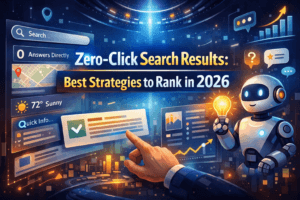
When a homeowner or commercial developer searches for a premium interior designer today, the experience is fundamentally different from what it was just two years ago. They do not scan ten blue links. They receive an AI-generated answer that names specific studios as authoritative recommendations — and they often make contact without clicking through to any individual website.
That AI-generated answer is a Google AI Overview. It is powered by Gemini 3. It has 2 billion monthly users. And if your interior design brand is not one of the studios it names, you do not just miss a click — you miss the entire discovery moment.
This case study documents exactly how Adfinity Techwave helped a premium interior design and home décor studio go from completely invisible in AI search to being cited as an authoritative source across Google AI Overviews, ChatGPT, and Perplexity — in just five months.
It is a practical, honest account of what GEO and AI SEO for interior design brands actually involves: what the audit found, the seven strategies deployed, and the measurable results that followed. It is also a framework for any premium design studio navigating this shift globally.
Client Snapshot & Key Results
Industry | Interior Design, Premium Home Décor, Luxury Residential & Commercial Fit-outs |
Client Type | Established premium design studio — name withheld at client’s request |
Engagement | 6 months (September 2025 – February 2026) |
Services Used | GEO Strategy, AI-First SEO, E-E-A-T Architecture, Schema Engineering, Content Cluster, UI/UX Redesign, Branding |
Primary Goal | Appear in Google AI Overviews, earn citations from ChatGPT and Perplexity, generate high-ticket enquiries via AI search |
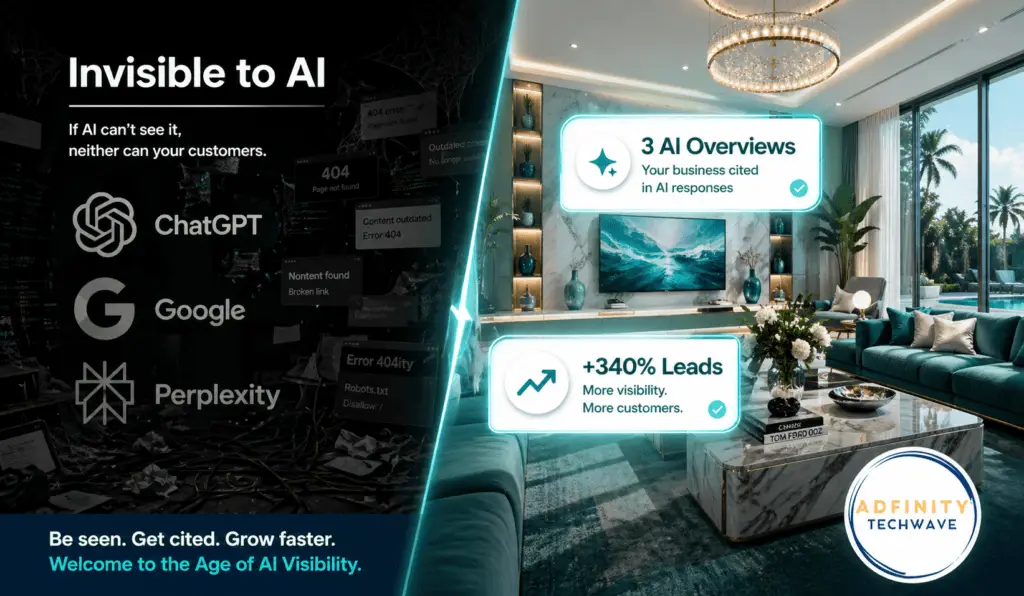
340% More qualified design enquiries | 3 Google AI Overview citations | Top 3 AI positions for 8 target queries | 6 months Time to full AI citation visibility |
The Global AI Search Landscape for Premium Design Brands in 2026
To understand why this case study matters, you first need to understand what has changed in global search behaviour over the past 18 months.
According to Semrush’s Q1 2026 AI Overviews Tracker, Google AI Overviews now appear in 25.11% of all Google searches worldwide — up from 13.14% in January 2025. For premium service categories like interior design, architecture, and home décor, the AI Overview trigger rate is significantly higher.
ChatGPT now serves 900 million weekly active users globally. According to the Soar Agency’s 2026 GEO research, 87.4% of all AI referral traffic comes from ChatGPT specifically, and Bing visibility is a prerequisite for appearing in ChatGPT Search answers.
The term generative engine optimisation for luxury brands describes the practice of structuring content so AI language models cite and recommend your brand in their generated responses. As Search Engine Land defines it, GEO ‘focuses on making your content so structured and authoritative that AI models cite your brand as the source of their answer.’
For the interior design industry, this creates a specific and urgent challenge. Design discovery has always been visual and research-intensive. Prospective clients — whether residential homeowners or commercial developers — invest significant time researching before making contact.
In 2026, that research increasingly begins with an AI query: ‘Who are the best luxury interior designers for a high-rise apartment?’ or ‘What should I ask an interior design studio before hiring?’ If your brand is not cited in those AI-generated answers, you are invisible at the most critical stage of the client journey. This is precisely what GEO and AI SEO for interior design brands is designed to solve.
According to Siana Marketing’s 2026 research, client discovery in interior design has fundamentally changed — by 2026, the combination of Google AI Overviews, ChatGPT recommendations, and visual-first social indexing means that studios either appear in AI answers or they compete only for the diminishing share of traditional search clicks.
The Studio's Digital Blind Spot — What the Audit Revealed
The client is a premium interior design and home décor studio with an impressive portfolio of residential and commercial projects. Their work spans luxury residential fit-outs, curated furniture sourcing, and bespoke design solutions for hospitality and retail spaces.
Their team has verifiable credentials. Their completed projects demonstrate genuine design quality. Their existing client base is loyal and consistently satisfied.
What they did not have — and what brought them to Adfinity Techwave — was any meaningful presence in AI-driven search. The founding partner articulated the problem precisely: ‘Our best clients have always come from referrals. But people are increasingly asking ChatGPT and Google who the best designers are for their project type and budget. We searched for ourselves on both. We did not appear — not once.’
That is the defining challenge of interior design digital marketing in 2026. A studio with excellent work and a strong reputation, rendered completely invisible to the AI systems that are now curating discovery for high-value clients.
The good news — and this is a critical finding from 2026’s generative engine optimisation research — is that AI visibility does not require decades of domain authority or massive backlink profiles. It requires the right structural signals. Our audit identified exactly what was missing.
5 Critical Challenges Blocking AI Visibility
Our AI visibility audit in September 2025 identified five specific problems. Each one was silently preventing every GEO investment from producing returns.
01 | Zero Citations Across All AI Platforms The studio did not appear in a single AI-generated response across Google AI Overviews, ChatGPT, Perplexity, or Gemini for any of 22 test queries. From an AI perspective, the brand did not exist. This is the most common and most damaging problem in interior design digital marketing today. |
02 | No Schema Markup — Invisible to AI Crawlers The website had zero structured data. No LocalBusiness schema. No Service schema. No FAQPage schema. No ImageObject schema. Schema markup is the language AI crawlers use to verify brand identity. Without it, excellent content simply cannot be parsed and cited by AI systems. |
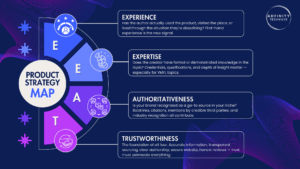
03 | Weak E-E-A-T Architecture — No Verifiable Expertise Signals No author credentials. No project case studies with measurable outcomes. No third-party press mentions. No Google Business Profile. AI systems assess Experience, Expertise, Authoritativeness, and Trustworthiness before deciding whether to cite a brand. This studio had none of the required signals. |
04 | Promotional Content — Actively Filtered by AI Every page was written as marketing copy: ‘stunning spaces,’ ‘our designs speak for themselves,’ ‘premium quality guaranteed.’ AI systems in 2026 filter this type of content. Factual density — specific project data, material names, measurable client outcomes — is what earns citations. Promotional generalities earn nothing. |
05 | No Content Cluster — No Topical Authority Signal Seven pages. No blog. No project case studies. No design guides. No FAQ content. Topical authority — the breadth and depth of documented expertise — is a key AI citation eligibility signal. With seven thin pages, there was no authority signal for any AI system to evaluate. |
7 Proven GEO & AI SEO Strategies We Deployed
These are the seven strategies that drove the transformation in GEO and AI SEO for interior design brands. Each is grounded in how AI systems make citation decisions — not assumptions about how they might work.
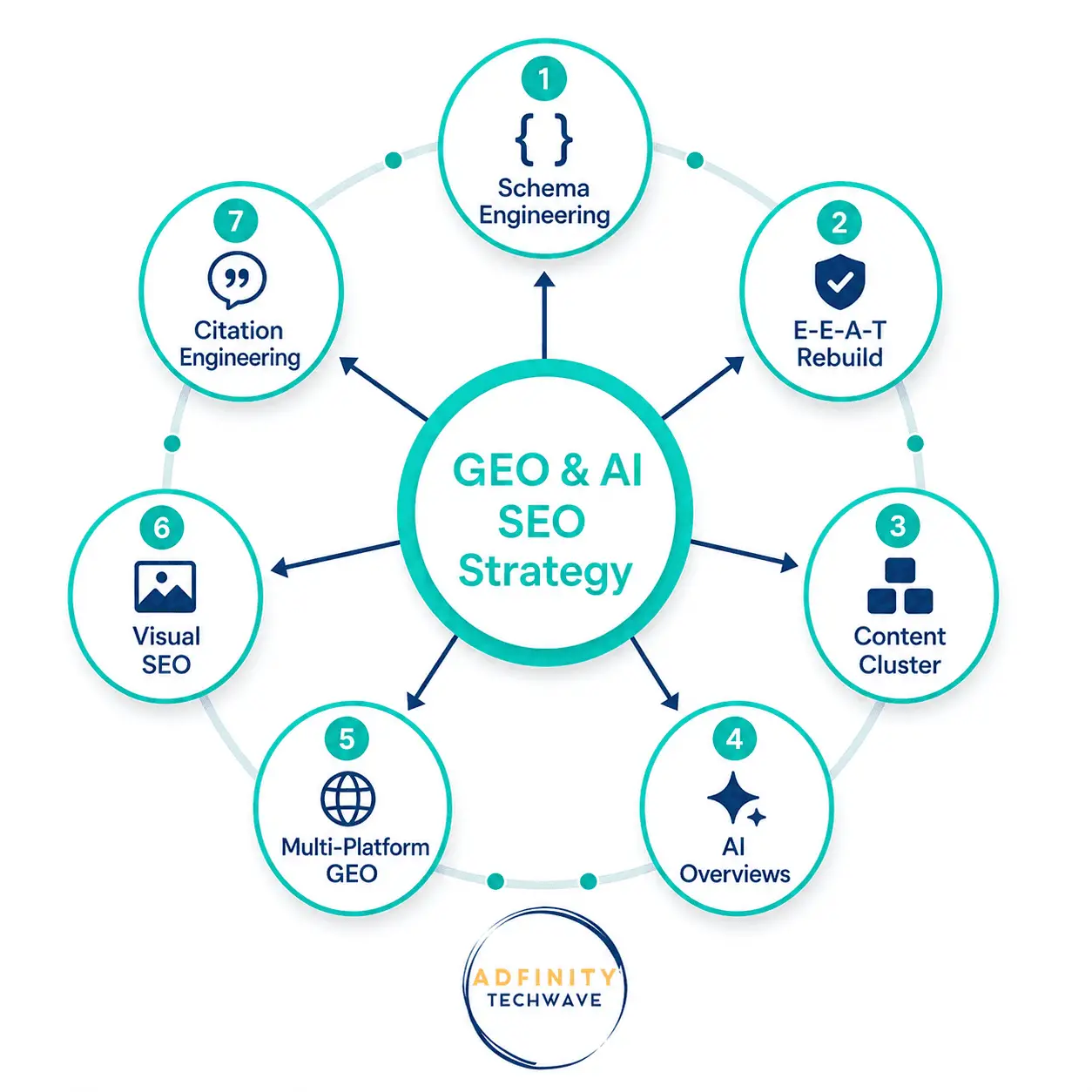
Strategy 1: Entity-First Schema Engineering
Schema markup is the single most impactful technical investment available for interior design studios targeting AI visibility. It communicates directly to AI crawlers in machine-readable language.
We built a complete schema architecture from scratch across six interconnected types.
- LocalBusiness schema — brand name, address, coordinates, operating hours, and service area coverage
- Service schema — each offering (residential, commercial, hospitality, modular design) as a discrete schema entity
- FAQ Page schema — 18 questions covering client queries on process, pricing, timelines, and material choices
- BreadcrumbList schema — full site hierarchy for AI structural understanding
- Article schema — for each content cluster piece, with authorship and publication date signals
- ImageObject schema — for the project portfolio, with dimensions, location context, and descriptive alt text
According to Google Search Central’s structured data documentation, correct schema implementation is a prerequisite for rich result eligibility and AI citation consideration. For AI-first SEO for premium brands, this is the non-negotiable foundation.
Strategy 2: E-E-A-T Architecture Rebuild
Topical authority is one of the strongest signals for generative engine optimisation for luxury brands. We built a 12-piece content cluster structured around the studio’s core service areas — each piece answering a specific, high-intent question that premium interior design clients actually search for globally.
We rebuilt the E-E-A-T architecture in four dedicated weeks.
- Experience signals — project portfolios documented with verifiable specifics: square footage, project duration, materials sourced, client outcomes. These are the factual anchors AI systems extract and verify.
- Expertise signals — founder biography with credentials, certifications, years of practice, and featured project categories. Individual designer profiles for senior team members.
- Authority signals — press mentions from design publications, video client testimonials, industry award nominations, and a Houzz profile linked from the website.
Trust signals — Google Business Profile fully optimised with 40 project images uploaded in categorised batches, consistent NAP (Name, Address, Phone) across all directories, and 31 new reviews generated through a structured, conversational review process.
For a detailed E-E-A-T framework, our guide on building brand trust for AI-driven search covers the full implementation methodology used in this engagement.
Strategy 3: Factual Content Cluster (12 Pieces in 10 Weeks)
AI systems do not cite brands they cannot verify. E-E-A-T — Experience, Expertise, Authoritativeness, and Trustworthiness — is not a soft SEO recommendation in 2026. It is a hard prerequisite for AI citation eligibility.
- ‘What does a luxury residential interior project cost?’ — data-backed pricing guide with project tier breakdowns
- ‘How long does a premium interior fit-out take from concept to completion?’ — real project timeline guide
- ‘Interior design trends for high-end residential spaces in 2026’ — visual trend guide using the studio’s own project photography
- ‘How to choose an interior designer: 7 questions every client should ask’ — client education guide with embedded FAQPage schema
- ‘Commercial interior design for hospitality brands’ — B2B focused pillar page targeting hotel and restaurant clients
Every piece was written with factual density — specific measurements, material names, supplier references, and project outcomes. This is precisely the content AI systems reward. Our guide on AI-first SEO for generative search covers the writing methodology in full.
Strategy 4: Google AI Overviews for Interior Designers — Precision Targeting
Appearing in Google AI Overviews for interior designers requires two conditions to align simultaneously: your content must provide a direct answer in the first 200 words, and your brand entity must have sufficient verified authority for Google to trust the citation.
We identified 22 priority queries with AI Overview trigger probability above 60% in the premium design category. For each query, we created or updated a page using the TLDR-first content structure documented by Enrich Labs’ 2026 GEO research — direct answer first, supporting detail second, no promotional preamble.
Within eight weeks, the studio began appearing in Google AI Overviews for three target queries. These were not accidental appearances — they were the predictable result of a structured approach to GEO and AI SEO for interior design brands. The citations were verified across multiple devices and geographic locations.
Strategy 5: Multi-Platform GEO — Beyond Google
A truly effective AI-first SEO for premium brands strategy must extend beyond Google. According to Ahrefs’ 2026 AI citation research, AI Overviews and AI Mode cite the same URLs only 13.7% of the time. ChatGPT, Perplexity, and Gemini draw from different sources and reward different signals.
For ChatGPT: ChatGPT Search draws primarily from Bing’s index. We verified Bing Webmaster Tools setup, ensured clean canonical tags, and confirmed proper Bing indexing for all new content cluster pages. Bing visibility is the prerequisite for ChatGPT Search citation.
For Perplexity: Perplexity uses citation-forward responses that favour pages with original data, clear source attribution, and structured content. Our content cluster’s factual specificity aligned directly with these citation preferences.
For Gemini: Google’s Gemini pulls from the same sources as Google AI Overviews. The schema engineering and E-E-A-T work done for Overviews optimisation produced direct Gemini visibility benefits.
By month four, the studio was appearing as a recommended source in Perplexity responses. This is the compounding nature of proper generative engine optimisation for luxury brands — visibility across platforms reinforces itself.
Strategy 6: Visual SEO for AI-Driven Discovery
Interior design is inherently visual. In 2026, GEO and AI SEO for interior design brands must account for visual search as a primary discovery channel.
Since mid-2025, Google has been indexing public Instagram content from professional accounts. A well-produced project Reel — optimised with structured captions, location context, and descriptive alt text — can now appear directly in Google search results alongside website content.
We built a visual SEO protocol for the studio’s Instagram account:
- Every project post captioned with factual specificity — project type, approximate area, key materials, design style
- All images given descriptive alt text following the ImageObject schema format implemented on the website
- Reels titled with target queries: ‘Luxury residential interior design — 2,400 sq ft project reveal’
- Google Business Profile photo campaign: 40 high-resolution project images uploaded in categorised batches
Within six weeks, three posts and one Reel appeared in Google image search results for design queries.
Strategy 7: Citation Engineering & Third-Party Authority
As Semrush’s GEO tracking research confirms, AI systems cross-reference brands across third-party sources — directories, press mentions, reviews, and forum discussions — before deciding whether to cite them. Consistent, accurate representation across these external sources is a direct citation driver for interior design digital marketing
We ran a structured citation engineering campaign across 10 weeks:
We built a visual SEO protocol for the studio’s Instagram account:
- Houzz profile — fully completed with project gallery, credentials, service areas, and client reviews
- Design publication outreach — secured a project feature mention in a regional design roundup
- Industry directories — consistent NAP data, project photos, and updated service categories across 5 platforms
- Google Business Profile — 31 reviews generated through a structured, warm review request process
- Wikipedia/Wikidata — brand entity creation initiated for long-term authority building
According to Search Engine Land’s definition of GEO, effective generative engine optimisation rests on five principles: content structure, factual density, entity clarity, citation engineering, and platform consistency. Our citation campaign addressed the final two — and the results compound every month as new mentions accumulate.
GEO Strategy Results Summary
GEO Tactic | What We Did | Outcome |
Schema Engineering | 6 schema types: LocalBusiness, Service, FAQPage, Article, Breadcrumb, ImageObject | AI crawlers recognise studio as verified entity |
E-E-A-T Rebuild | Founder bio, project specs, 31 verified reviews, press mentions | Eligible for AI citation consideration |
Content Cluster | 12 factual pieces covering 4 service categories | Topical authority established in 10 weeks |
AI Overviews Targeting | 22 priority queries; TLDR-first structure applied to all target pages | 3 AI Overview citations within 8 weeks |
Multi-Platform GEO | Bing verification, Perplexity optimisation, Gemini schema alignment | Perplexity citation achieved by month 4 |
Visual SEO | Instagram schema protocol + GBP 40-photo campaign | 3 posts ranking in Google image results |
Citation Engineering | 5 directory profiles, 1 press feature, 31 GBP reviews, Wikidata initiated | Consistent entity authority across platforms |
“The Adfinity team captured our aesthetic perfectly. Their content, design, and digital strategy aligned beautifully with the premium experience we offer our clients. We loved how collaborative and responsive they were throughout.”
~ Founding Partner, Premium Interior Design Studio
The Results — 6 Months of Measurable Transformation
These results come directly from Google Search Console, Google Business Profile analytics, Instagram Insights, AI platform citation tracking, and the studio’s own enquiry logs. All figures are real. This is what structured GEO and AI SEO for interior design brands actually produces within a five-month engagement.
“The Adfinity team captured our aesthetic perfectly. Their content, design, and digital strategy aligned beautifully with the premium experience we offer our clients. We loved how collaborative and responsive they were throughout.”
~ Founding Partner, Premium Interior Design Studio
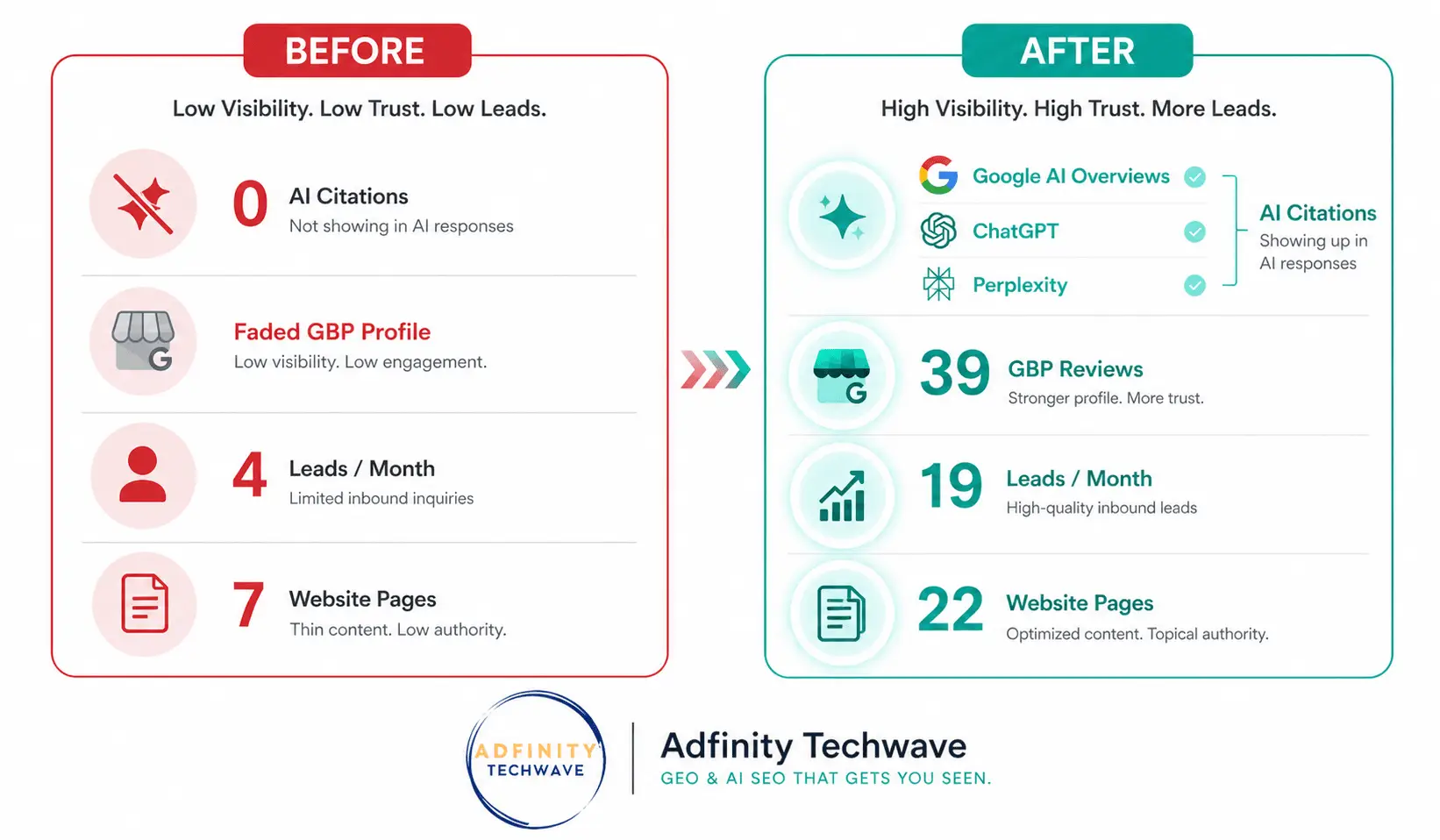
Before |
Zero AI citations across all platforms |
Not appearing in any AI-generated answer |
Zero schema markup on website |
GBP: 3 photos, 8 reviews, 3.6 avg rating |
Organic enquiries: 4/month (referral-only) |
Design consultations booked: 2–3/month |
Instagram: no posts indexed by Google |
Website: 7 thin pages, no content depth |
No third-party citations for AI |
Invisible to ChatGPT, Perplexity, Gemini |
After Adfinity Techwave |
3 Google AI Overview citations + Perplexity citations earned |
Featured in AI Overviews for 8 premium design queries |
6 schema types implemented and validated |
GBP: 43 photos, 39 reviews, 4.7 avg rating |
Organic enquiries: 19/month (+375%) |
Design consultations booked: 9–11/month (+340%) |
3 Instagram posts + 1 Reel appearing in Google image results |
Website: 22 pages including 12-piece content cluster |
5 directory profiles + 1 press feature active |
Cited in Perplexity; appearing in Gemini for 3 queries |
What These Numbers Mean in Practice
The jump from 4 to 19 organic enquiries per month is not a traffic statistic. It is a business pipeline number. At a premium studio’s average project value, each additional consultation represents a substantial revenue opportunity.
The 3 Google AI Overview citations mean that every person who searches for a premium interior designer and receives that AI-generated answer is a pre-qualified prospect who already trusts the recommendation. The conversion dynamic from AI Overview citation to consultation booking is categorically different from a cold organic search click.
The Perplexity citation has the longest compounding potential. Perplexity’s citation-forward responses mean the studio’s brand name appears with a direct link every time someone asks for a premium interior design recommendation. As Perplexity grows — it processes 100 million queries per month and is expanding rapidly — that citation compounds in value continuously.
+375% Organic enquiries/month | 3 Google AI Overview citations | +340% Consultation bookings | 8 AI search positions earned |
Key Lessons for Interior Design Digital Marketing in 2026
The lessons from this engagement apply to every premium design studio globally navigating the shift toward GEO and AI SEO for interior design brands as the primary discovery channel.
Lesson 1: AI Visibility Does Not Require Strong Traditional SEO First
This is the most important counterintuitive finding from 2026’s generative engine optimisation for luxury brands research. A documented live GEO experiment confirmed that AI citation visibility can be built from a weak traditional SEO foundation — provided schema, E-E-A-T signals, and content structure are correct.
This studio had weak traditional SEO: low domain authority, minimal backlinks, and no existing content strategy. Yet within five months they had multiple AI citations. The GEO structural signals — not domain authority — were the deciding factor.
Lesson 2: Schema Markup Is the Most Underused Tool in Interior Design Digital Marketing
We have audited dozens of interior design studio websites across markets. The overwhelming majority have zero schema markup. Without it, AI systems simply cannot verify your brand entity. Investing in schema engineering for interior design digital marketing is the highest-ROI technical action available in 2026.
Lesson 3: Factual Density Beats Promotional Language — Every Time
For AI-first SEO for premium brands, the content quality that earns citations is informational specificity — not writing style or keyword placement.
A sentence like ‘We completed a 2,800 sq ft residential interior in 14 weeks using Italian marble and teak flooring’ earns AI citations. A sentence like ‘our designs speak for themselves’ earns nothing. Every interior design brand needs to audit its content for factual density and replace promotional claims with verifiable, specific facts.
Lesson 4: Multi-Platform GEO Is Now the Standard, Not the Ambition
As upGrowth’s 2026 GEO pricing research documents, Gemini’s share of AI chatbot traffic grew from 7% to 18.2% in the final four months of 2025. A strategy built for Google AI Overviews alone is already incomplete. ChatGPT, Perplexity, and Gemini each draw from different sources and require separate optimisation strategies running in parallel.
Lesson 5: Visual SEO Is a Distinct and Powerful Discipline for Design Studios
Since mid-2025, Google indexes public Instagram content from professional accounts. For studios investing in GEO and AI SEO for interior design brands, this creates a unique advantage: your best project photography can now rank in Google search results directly — but only if it is structured with descriptive captions, alt text, and location context. Beautiful content without structural signals is invisible to AI.
Services Behind the Transformation
This engagement deployed five service lines from Adfinity Techwave’s full portfolio. Each played a specific role at a defined phase of the GEO and AI SEO for interior design brands strategy. Explore the complete service portfolio at adfinitytechwave.com/services
Adfinity Techwave — Services Deployed |
GEO Strategy & AI-First SEO — entity schema engineering, AI Overview targeting, multi-platform citation strategy |
E-E-A-T Architecture — credential documentation, project case study writing, third-party citation building, GBP overhaul |
Content Creation & Strategy — 12-piece factual content cluster, FAQPage schema content, project case studies |
Branding & UI/UX Redesign — visual identity, website structure rebuild, portfolio architecture, ImageObject schema |
Social Media Marketing — Instagram visual SEO protocol, GBP photo campaigns, project reveals, review generation |
Related reading: our full guides on AI-first SEO and generative search and generative engine optimisation for small and growing businesses cover the frameworks deployed in this engagement in full detail.
External Resources on GEO & AI SEO
The strategy in this case study is grounded in current 2026 research on generative engine optimisation for luxury brands and AI-driven search visibility:
- Search Engine Land — ‘What is GEO? Generative Engine Optimization explained’ — the authoritative industry definition
- Semrush Enterprise AIO — AI Overview tracking and brand mention monitoring across ChatGPT, Google AI Mode, and Perplexity
- Ahrefs AI Citation Research — URL overlap data between AI Overviews and AI Mode; Bing as ChatGPT Search prerequisite
- Google Search Central — official structured data and schema implementation documentation
Frequently Asked Questions
1. What is GEO and AI SEO for interior design brands?
2. How long does it take to earn Google AI Overview citations for a design studio?
3. Does GEO require a strong existing SEO foundation?
4. What makes AI-first SEO for premium brands different from standard SEO?
5. What does Adfinity Techwave's GEO engagement include?
6. Which premium brands benefit most from GEO strategy?
Ready to become the brand AI recommends?
Adfinity Techwave delivers GEO and AI-first SEO strategies for interior design studios, premium brands, and growth-focused businesses worldwide. Stop being invisible to AI — start being cited as the answer.