

The New Era of Search: Why Visibility Now Means “Citation”
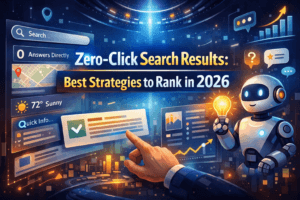
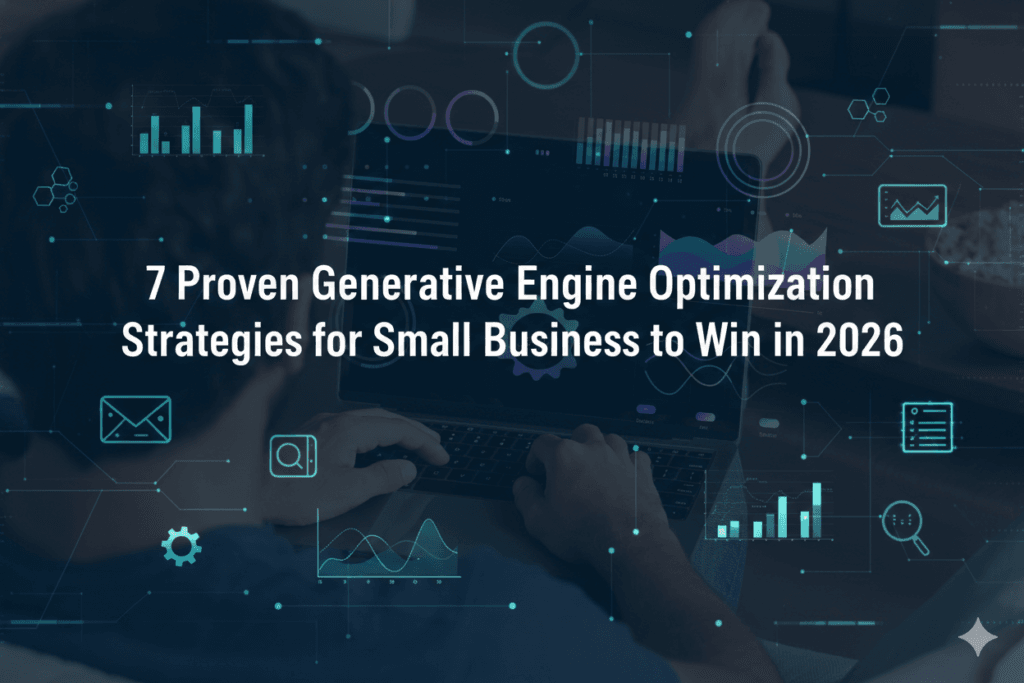
In 2026, the traditional search engine results page (SERP) has undergone its most radical transformation since the invention of the algorithm. For years, small business owners focused on climbing the “Ten Blue Links,” but today, 60% of users never even click a link—they get their answers directly from AI-generated summaries. As click-through rates (CTR) on standard organic results fluctuate, a new survival skill has emerged: Generative Engine Optimization for small business.
To remain visible, your brand can no longer just “rank”; it must be referenced. At Adfinity Techwave, we are seeing a fundamental shift where being the “cited source” in a Google Gemini or Bing Copilot overview is the new #1 spot. If an AI doesn’t name you, your business effectively doesn’t exist. This is why mastering Generative Engine Optimization for small business is the most valuable asset in your marketing toolkit this year.
What is Generative Engine Optimization (GEO)?
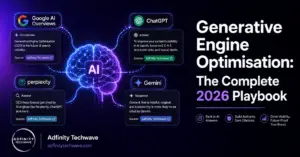
Definition: Generative Engine Optimization for small business (GEO) is an advanced digital marketing discipline focused on optimizing website content to be processed, cited, and recommended by AI-powered search engines and Large Language Models (LLMs) like Google Gemini, ChatGPT, and Search Generative Experience (SGE). Unlike traditional SEO, which prioritizes click-through rates, Generative Engine Optimization for small business prioritizes citation frequency and brand authority within synthesized AI responses.
The digital landscape has shifted. In 2026, the era of the “blue link” is fading, replaced by the era of the “answer.” For small business owners, the goal is no longer just to rank on page one—it is to be the brand that Google Gemini, ChatGPT, and Microsoft Copilot cite as the definitive authority.
This shift is called Generative Engine Optimization (GEO). While traditional SEO focuses on driving clicks, GEO focuses on driving mentions, citations, and trust within AI-generated responses. If your business isn’t optimized for GEO, you are essentially invisible to the 60% of users now using AI Search Overviews to make buying decisions.
GEO vs. SEO: Key Differences for 2026
To stay ahead, you must understand that GEO is not replacing SEO; it is an evolution of it. At Adfinity Techwave, we help businesses bridge this gap by layering GEO strategies over a technical SEO foundation. Understanding the distinction is the first step in successful Generative Engine Optimization for small business implementation.
| Feature | Traditional SEO | Generative Engine Optimization (GEO) |
| Primary Goal | Rank #1 on SERP for clicks. | Be cited/sourced in AI answers. |
| Success Metric | Click-Through Rate (CTR). | Citation Frequency & Brand Mentions. |
| Content Style | Keyword-focused blog posts. | Answer-first, structured data blocks. |
| Search Intent | Matching specific keywords. | Solving complex, conversational queries. |
| User Journey | Search → Click → Visit Website. | Search → AI Answer (Citation) → Decision. |
1. Master the “Answer-First” Content Hierarchy
AI engines are designed to synthesize information quickly. If your content is buried under a 500-word “Introduction to Marketing,” the AI will skip you. To win at Generative Engine Optimization for small business, you must adopt an Answer-First approach.
- State the Answer Immediately: Put the core solution in the first 10% of your content.
- Use Clear Headings: Instead of “Our Process,” use “How Adfinity Techwave Automates Lead Generation.”
- Chunking: Break long paragraphs into 2–3 line “information chunks” that AI can easily extract.
2. Implement Advanced Schema Markup for AI Recognition
In 2026, Schema Markup is the language AI speaks. By using JSON-LD structured data, you provide a “map” that tells Google exactly what your business does. Generative Engine Optimization for small business relies heavily on Organization Schema to define your brand entity and Product/Service Schema to feed accurate pricing to AI shopping assistants. For a deep dive into technical requirements, the official documentation at Schema.org remains the gold standard for developers.
3. Build a “Citation-Ready” Digital Reputation
Google’s AI Search Overviews don’t just look at your website; they scan the entire web to see who else trusts you. To succeed in Generative Engine Optimization for small business, you need “Off-Site Authority.” This involves:
- Digital PR: Getting mentioned in industry-specific news outlets.
- Verified Reviews: AI engines prioritize businesses with high-volume, recent, and verified customer feedback.
- Authority Alignment: Align your brand with recognized leaders. For example, staying updated with Google Search Central is critical for understanding how AI crawlers interpret your site.
4. Optimize for Conversational and Long-Tail Queries
People no longer search for “Digital Marketing Agency.” They ask: “Which digital marketing agency in Bhubaneswar has the best ROI for real estate startups?” Your content must mirror these natural language patterns. Focus on long-tail keywords that address specific pain points, such as “AI SEO strategies for local service providers” or “How to get my business cited in Google AI search.” Effective Generative Engine Optimization for small business anticipates the questions users will ask their AI assistants.
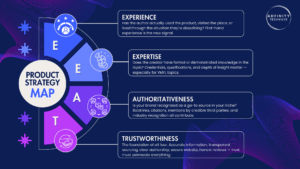
5. Why E-E-A-T is the Backbone of GEO
Google’s Helpful Content System heavily weighs Experience, Expertise, Authoritativeness, and Trustworthiness. In 2026, AI engines are programmed to avoid “hallucinations” by citing sources with verified credentials. For small businesses, this means your “About Us” and “Team” pages must link to professional certifications and LinkedIn profiles. This is a core part of the Adfinity Techwave philosophy: building digital trust through transparent data.
6. The Role of Semantic Density Over Keyword Frequency
Traditional SEO often fell into the trap of “keyword stuffing.” GEO, however, relies on semantic density. This means using words that are contextually related to your primary topic. When writing about Generative Engine Optimization for small business, an AI expects to see terms like “Large Language Models,” “Tokenization,” and “Natural Language Processing.” If these related terms are missing, the AI may deem your content “shallow.”
7. Strategic Internal Linking for Contextual Authority
Internal links do more than just help users navigate; they help AI understand the relationship between your pages. When you link from a blog post to a service page – like our Web Development Services – you are telling the generative engine that these two topics are semantically linked. This builds a “web of knowledge” on your site that AI can confidently crawl and cite as part of a comprehensive Generative Engine Optimization for small business strategy.
FAQ: Master GEO for Your Small Business
Q: How do I get my business cited in Google AI search?
To get cited, you must provide direct, factual answers early in your content, use FAQ schema, and maintain high E-E-A-T signals. AI prefers sources that offer unique data and clear, structured layouts that are easy to parse. Ensuring your technical infrastructure is sound is a service we prioritize at Adfinity Techwave.
Q: Is GEO better than traditional SEO for 2026?
Neither is “better.” SEO drives the traffic you own (website visits), while GEO drives the visibility you need in AI-led discovery. A balanced strategy uses SEO as the foundation and GEO as the growth engine for the modern search era.
Q: Will AI Search Overviews reduce my website traffic?
“Informational” traffic may decrease, but traffic from AI citations is often higher intent. This makes Generative Engine Optimization for small business more profitable in the long run.
Q: What is the most important ranking factor for GEO?
Clarity and Trust. If an AI cannot verify your claims or find your information easily due to poor structure, it will not cite you. High-quality outbound links to sources like Moz can also help establish your topical relevance.
Q: Can Adfinity Techwave help with GEO implementation?
Yes. We specialize in transitioning traditional business models into the AI era by optimizing content structures, implementing advanced schema, and building the digital authority required for 2026 search environments.
Q: How often should I update my content for GEO?
AI models prefer “fresh” and “relevant” data. In 2026, content that is more than six months old is often ignored by AI Overviews in fast-moving industries like tech or real estate. Regular audits are essential.
Conclusion: The Future belongs to the “Cited”
Generative Engine Optimization for small business is no longer a luxury—it is a survival requirement. By moving from a keyword-stuffed strategy to a trust-based, structured content ecosystem, you ensure that when a customer asks an AI for a recommendation, your brand is the answer they receive.
Ready to dominate the AI Search Overviews? Contact Adfinity Techwave today to audit your website for GEO readiness and stay ahead of the 2026 curve.